
Do I Need An Alignment
After An Accident? Often, Yes.
Often yes, if the impact touched the front end, a wheel or the suspension, because even a few millimeters of bent geometry change how a car tracks. A car that pulls, wanders or sits with the steering wheel off center after a hit is telling you the alignment is out.
What an impact does to alignment
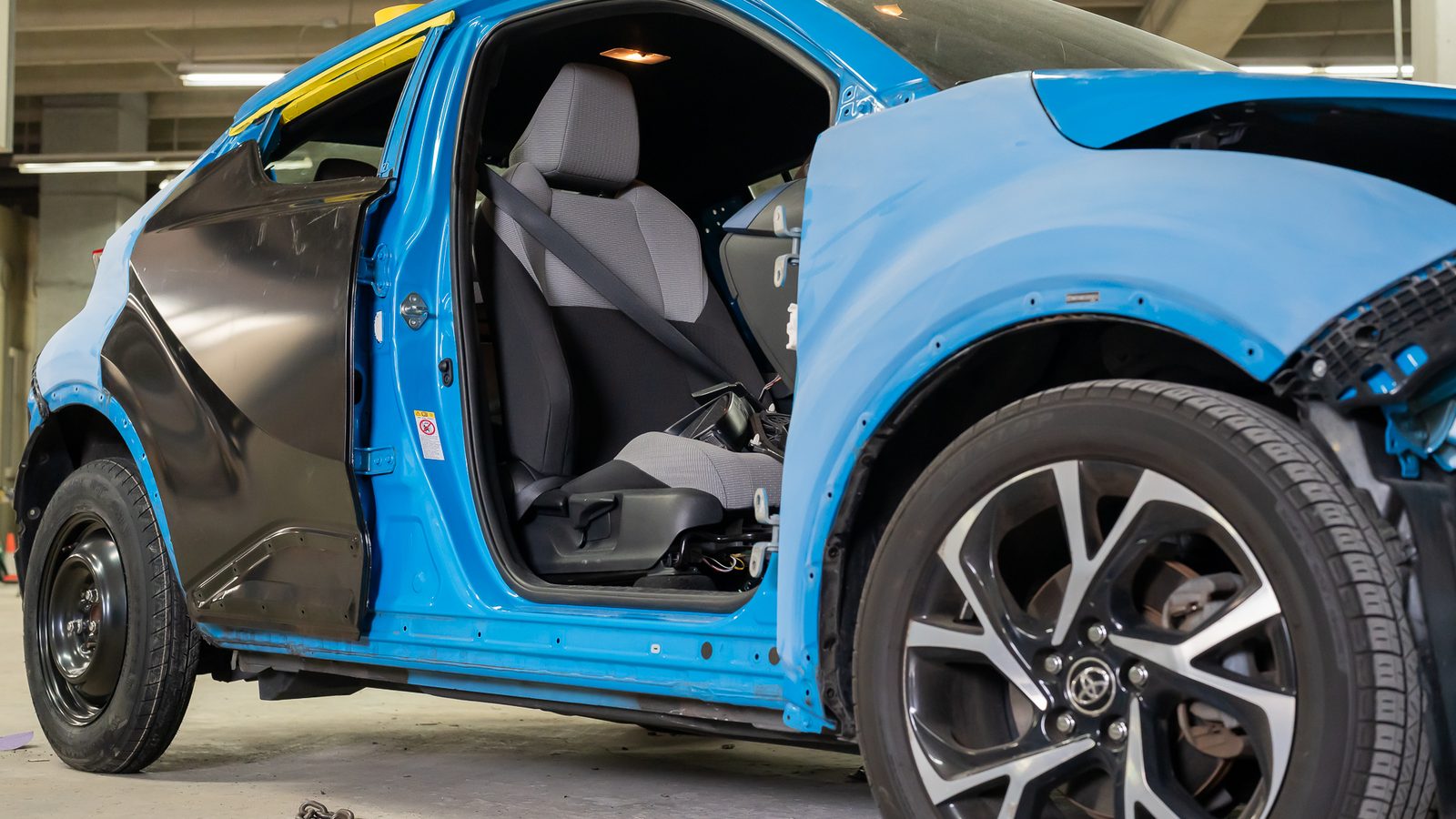
A collision moves more than sheet metal. The same impact that creased a fender can bend a control arm, shift a strut or move a subframe by a few millimeters, and a few millimeters is enough to change how the car tracks. The paint can look perfect while the geometry underneath is wrong.
Signs to watch for
The steering wheel sits off center on a straight road. The car pulls to one side. The front tires wear on one edge. You may only notice these weeks after the repair, which is why they get blamed on something else. If your car does any of them after a repair somewhere else, it is worth having looked at.
The cost of waiting grows with the miles. Tires and bushings pay for geometry that was never corrected, so the problem gets more expensive the longer it runs.
Why alignment comes last
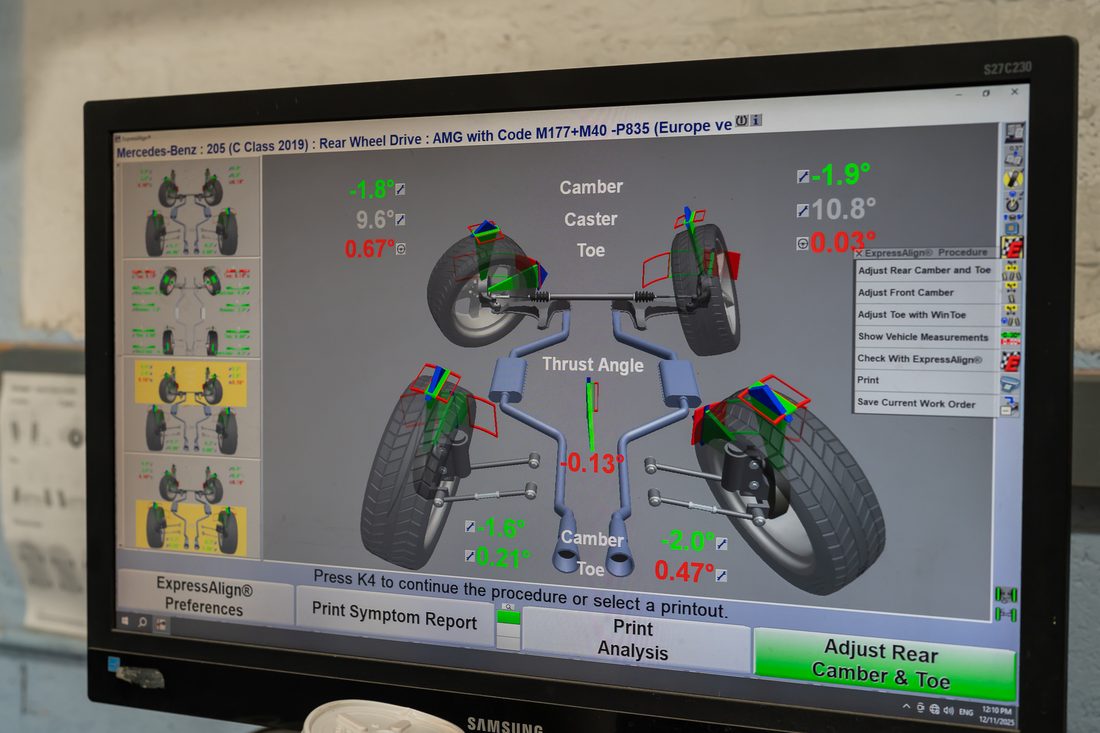
An alignment done before structural work is finished measures a car that is about to change shape, so it tells you very little. The right order is structure first, then suspension and steering components, then a four-wheel alignment measured against the manufacturer's figures for camber, caster and toe. We measure all four wheels, not just the front pair, and check the result with a road test.
Alignment also sits in front of driver assistance calibration. Changing the thrust angle changes where a car is pointed, so calibration waits until the alignment is done.
How we check it
In The Shop.
Related Reading And Services
More on this topic from the shop:
Alignment After an Accident,
Answered.
Can I wait on the alignment if the car drives fine?
You can, but the cost grows. Geometry that was never corrected wears tires and bushings, and the longer it runs the more it costs.
Should the alignment happen before or after the bodywork?
After. An alignment taken before structural work is finished measures a car that is about to change shape. It belongs at the end, once the structure reads true.
Is alignment part of a collision repair at Precision?
On repairs that touch structure or suspension, yes. Alignment is the last step of most collision repair jobs, and the result is checked rather than assumed.
Car Pulling After A Hit?
Free estimates. No pressure. We handle everything, including your insurance claim.