
ADAS Calibration in Miami,
Aimed Right.
Driver assistance cameras and sensors scanned and recalibrated after a repair, so lane keeping and automatic braking read the road correctly. Free estimates.
The Systems That Watch
the Road For You.
Most cars built in the last decade carry some form of driver assistance: a camera behind the windshield reading lane markings, radar behind the front bumper watching the car ahead, sensors in the mirrors for blind spot warning, cameras in the bumpers for parking and surround view. They only work if they are aimed exactly where the manufacturer put them.
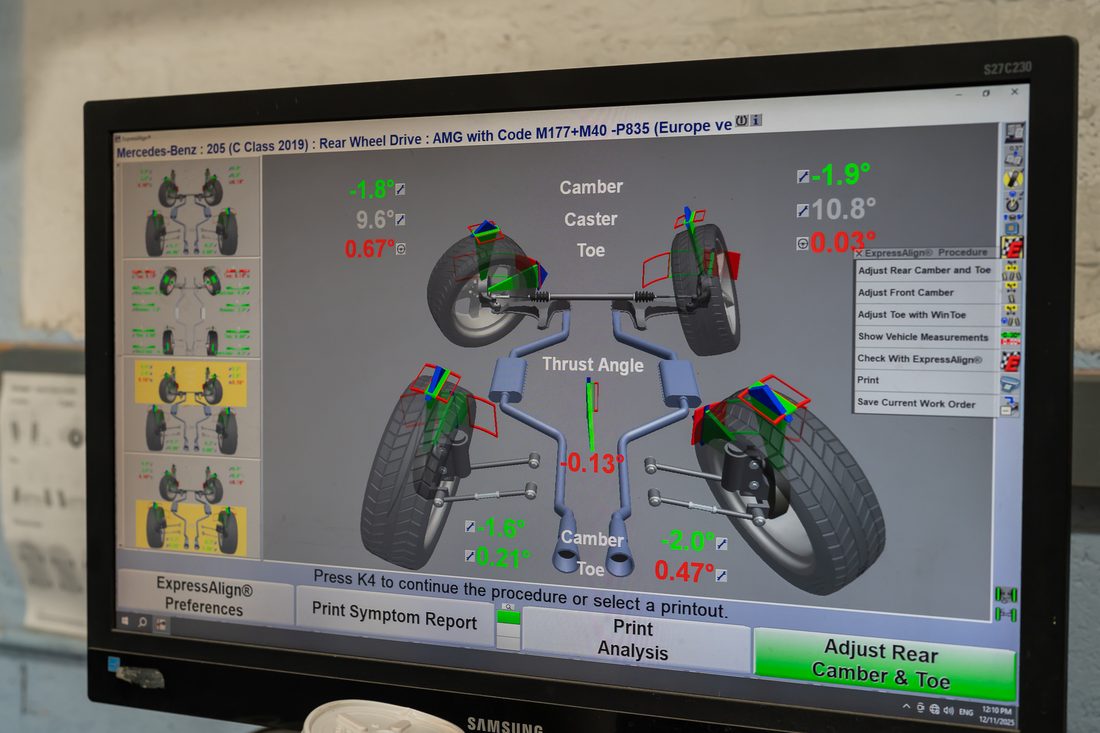
Collision repair disturbs almost all of those positions. Replacing a windshield moves the forward camera. Removing or replacing a front bumper moves the radar. Repairing a quarter panel or mirror housing moves a blind spot sensor. Even an alignment matters, because changing the thrust angle changes where the car is pointed relative to what the radar is measuring.
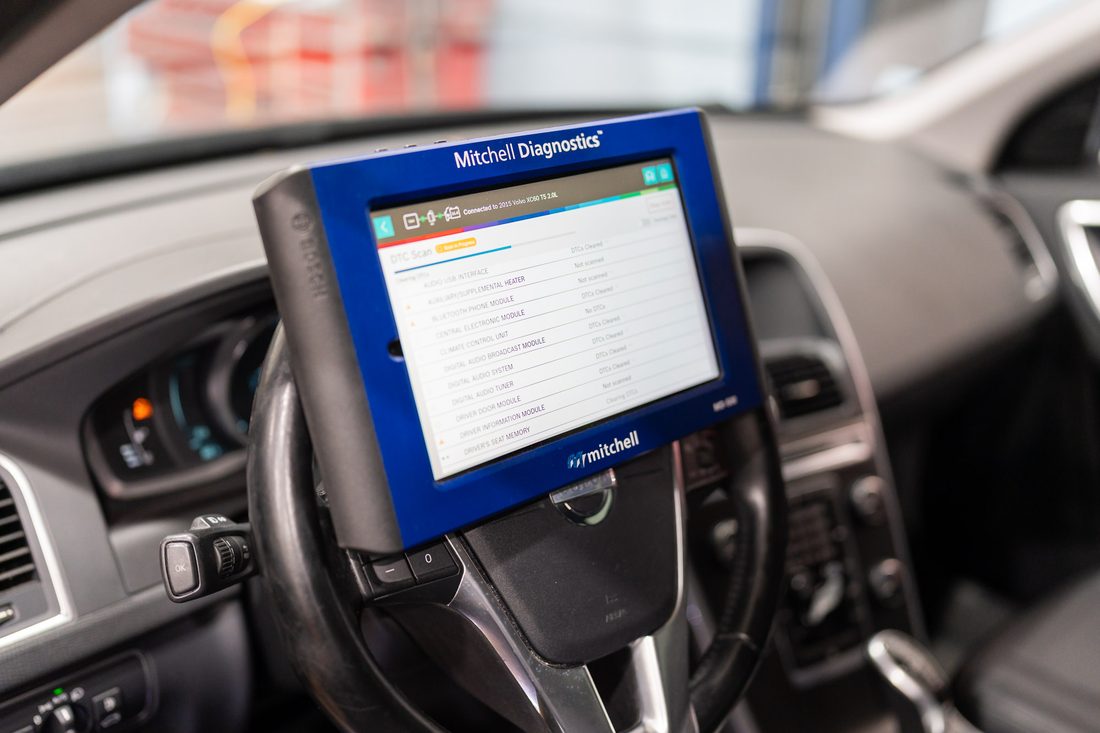
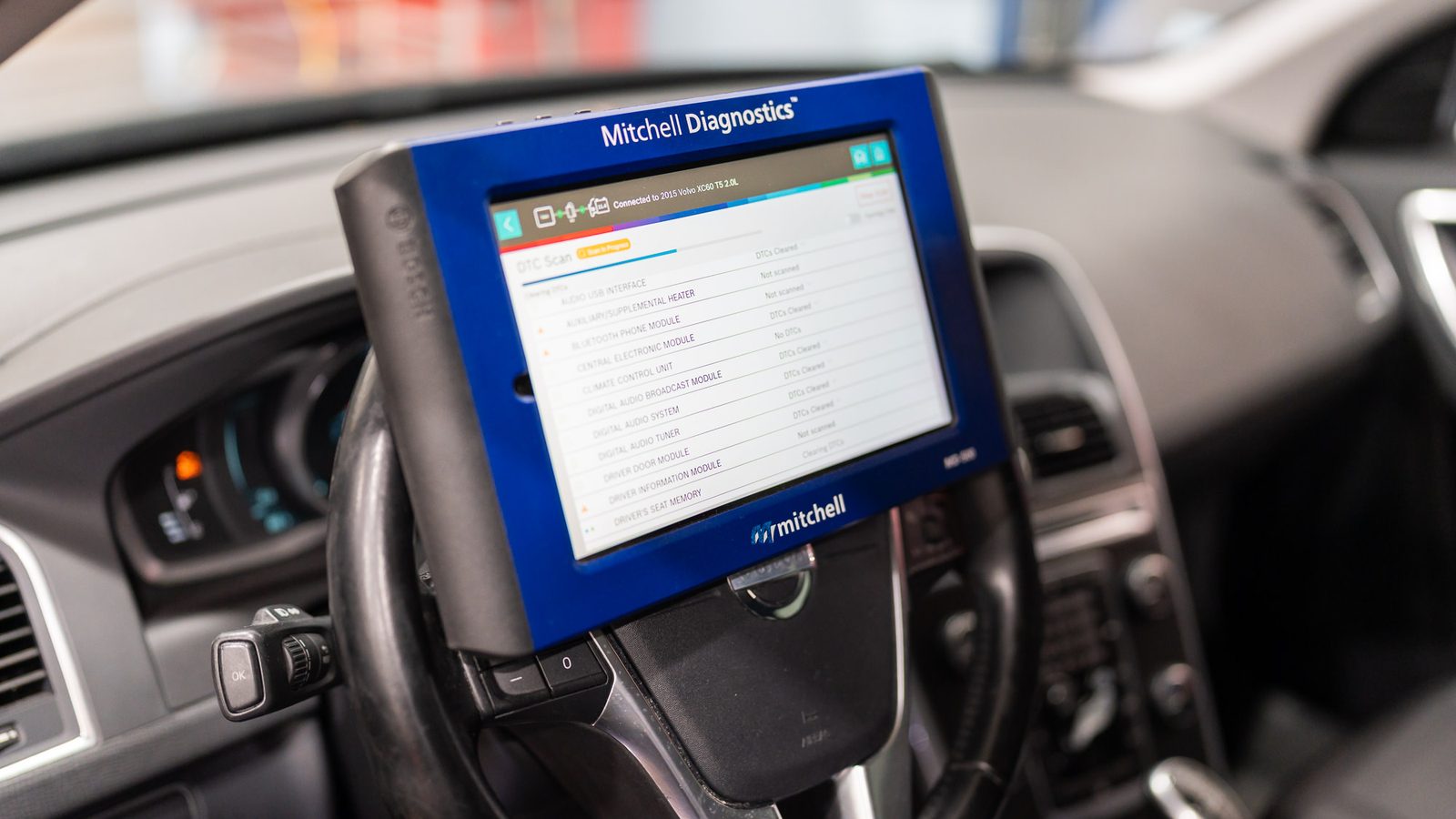
A vehicle is scanned before the repair and again after it, so faults that were present on arrival are separated from anything the repair introduced, and nothing is handed back with a module quietly reporting an error. Calibration follows the manufacturer's procedure for that vehicle, which for some systems is done with targets at set distances in the shop and for others requires driving the car under specified conditions.
The part worth knowing as an owner: no warning light on the dashboard is not proof that the systems are aimed correctly. A camera can be pointing slightly off and report no fault at all, while reading the lane a little to one side of where it actually is. That is the failure mode calibration exists to prevent, and it is why the check is not optional on a car that has one of these systems.
ADAS Calibration,
Step by Step.
A Look at the Process.
Related Repairs
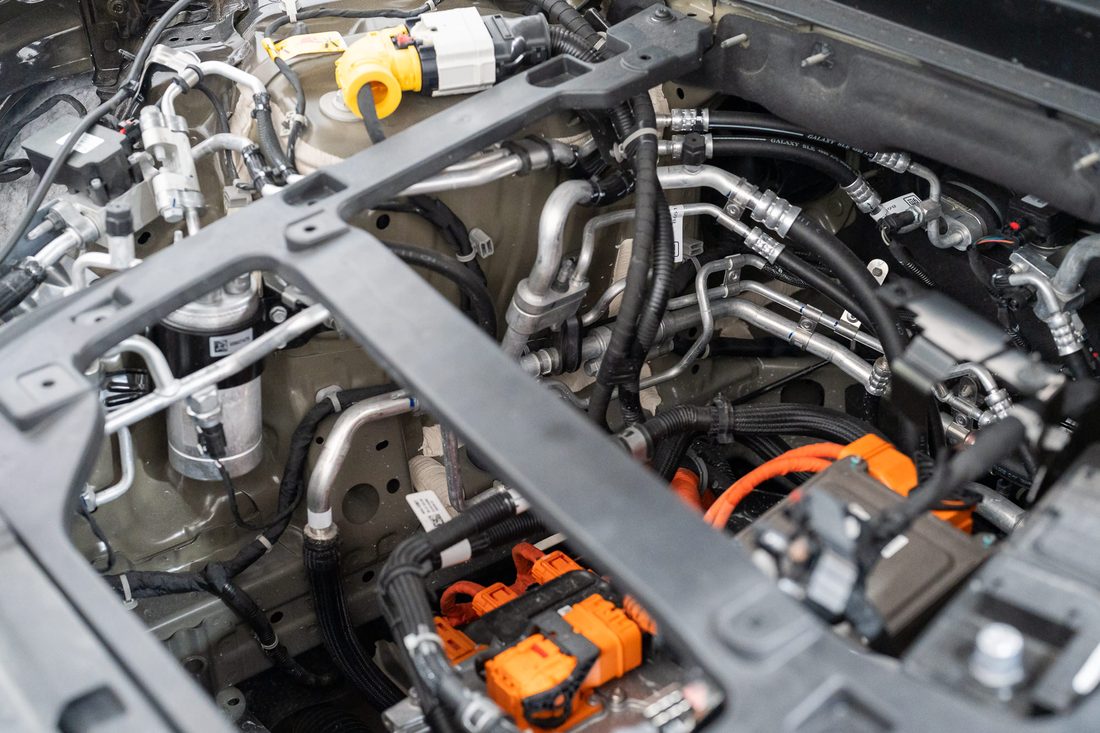
Calibration is the closing step of a Collision Repair on any vehicle with driver assistance systems. It depends on the geometry being correct first, which is covered on our Mechanical, Suspension and Alignment page, and on the structure reading true, covered under Structural Repair.
ADAS Calibration,
Answered.
Does my car need ADAS calibration after a repair?
It depends on what the car has and what the repair touched. Replacing a windshield, a front bumper, a mirror, or doing structural and suspension work are all common reasons a system needs recalibrating. We scan the vehicle and tell you what applies rather than adding it to every estimate by default.
How do I know whether my car has these systems?
If it has lane keeping assist, adaptive cruise control, automatic emergency braking, blind spot warning, or a surround view camera, it has driver assistance systems that can need calibration. If you are not sure, we can check when you bring the car in for the estimate.
The warning light is off, so is it fine?
Not necessarily, and this is the part most people are not told. A camera or radar can be aimed slightly off and still report no fault, which means the system is working from a picture of the road that is shifted from reality. The scan and the calibration are what confirm it, not the dashboard.
Been In An Accident?
Free estimates. No pressure. We handle everything, including your insurance claim.